
The history of unionisation in France dates back to the late 19th century, when the first trade unions were formed to represent the interests of workers in various industries. Over the years, unions in France have played an important role in shaping labor policies and improving working conditions for French workers.
History
Trade unions in France have long played an important role in the French economy
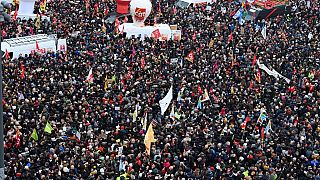
The French trade union movement began in the late 19th century, with the formation of the General Confederation of Labor (CGT) in 1895. The CGT was created to represent the interests of workers in France and played a key role in the labor movement during the early 20th century. However, the CGT was often criticized for its close ties to the French Communist Party and for its militant tactics, which sometimes led to violent strikes and protests.
In the 1930s, a new trade union federation, the French Democratic Confederation of Labor (CFDT), emerged to challenge the CGT’s dominance. The CFDT was more moderate than the CGT and focused on negotiating with employers to improve working conditions for French workers. In the post-World War II period, several other trade unions emerged in France, including the French Confederation of Christian Workers (CFTC) and the French Confederation of Management – General Confederation of Executives (CFE-CGC).
Today, there are several trade union federations in France, each with its own ideological and political orientation. The CGT remains the largest and most militant trade union federation in France, while the CFDT has become more centrist and focuses on negotiations with employers.
Effect on the economy
The economic effects of unionisation in France have been a subject of much debate over the years. Critics of unions argue that they can stifle economic growth by making it difficult for companies to adapt to changing market conditions. They also argue that unionisation can lead to inflexibility in labor markets, making it more difficult for employers to hire and fire workers. This has contributed to France’s historically high unemployment rate relative to other Western economies, with its unemployment rate hovering stubborn at around 10% during the 2010s as the UK and US oversaw sharp falls in their unemployment rates respectively.
However, supporters of unions argue that they are essential for protecting workers’ rights and ensuring that they receive fair wages and working conditions. They also argue that unions can help to reduce income inequality by negotiating higher wages for workers.
Ultimately, the history of unionisation in France is a long and complex one, with several trade union federations emerging over the years to represent the interests of French workers. While unions have been criticised for their militant tactics and potential to stifle economic growth, they have also played a crucial role in improving working conditions and reducing income inequality in France. Overall, the economic effects of unionisation in France are complex and depend on a variety of factors, including the political and ideological orientation of the unions themselves.

 Free Marketeer