
Unions. Source of much political and economic instability. The current inflation crisis, reminiscent of the 1970s, brings to light the chaos that they caused during that tumultuous decade. Thankfully, the efforts of successive Conservative and Labour administrations in the UK have limited their powers, relegating the Socialist dystopia of mass unionisation and collectivism to Marx’s manifesto.

Union membership has more than halved since its peak in 1980, a period coinciding with record economic progress – termed the Great Moderation. Unions promote allocative and productive inefficiencies while limiting employment, hurting the economy for all but a select few; the small minority of selfish union ministers that drag the rest of the economy to their behest.
Squandered ’70s
The 1970s saw a departure from the growing living standards of the previous two decades. Central Bankers and government bureaucrats hold much of the blame. Excessively expansionary monetary and fiscal policies inflated the money supply far above GDP growth rates, provoking an inflationary spiral. A subsequent sovereign debt crisis forced the UK to borrow from the IMF to the tune of $3.9 billion in 1975 – a thought now associated with the failing economies of South America. Unions made the inflationary problem worse.
Public sector workers are supposed to serve the public – hence the name. Such jobs aren’t associated with high pay, but rather with intentions of helping civilians and those in need. However, unions in the 1970s departed from public demands. As private sector workers struggled under the guise of government-created inflation, the public sector sought far above-pay inflation rises. In 1975, unions forced the government into a pay rise averaging over 28%; contrarily, the private sector saw real-term pay cuts of over 5% on average. Such pay increases bankrupted the government, suffering inflation of over 23%, leaving the then-Conservative government with no choice but to go to the IMF for financial aid. Despite this, unions continued to hassle and bankrupt the British economy, dragging the nation to its knees.

The late-1970s saw the ‘Winter of Discontent.’ Plagued with public sector workers continually striking, causing chaos for the ordinary, hard-working civilians. Fire-brigadiers started 1977 by demanding a 30% pay increase. Disgraceful for a multitude of reasons, notably, abandoning their public duty of protecting the public for an astronomical pay increase. Shameful. Similarly, inflation had fallen to 16% by that year, rendering their demands a 14% real terms pay rise. Especially considering the government was under severe financial pressure, trade union leaders continued to put their selfish interests ahead of the country.
Unions induced a disgusting level of disruption as households suffered from sharp falls in real incomes, making inflation far worse. In 1979, 23.5 million working days were lost to strikes. Scandalous. Even as disinflation followed, unions continued to demand out-of-touch pay rises, emptying the public purse. Eventually, the British public grew angry at this disruption, culminating in the election of Margaret Thatcher in 1979. Radical union legislation followed, restricting their power and ensuring ruthless unions could never again hold the nation to ransom.
Unions in 2022
In June and July of 2022, unions once again took to public disruption by putting their pockets ahead of the country. Much to the relief of most, unions are limited by the sharp fall in union membership due to reforms by successive governments, falling from 50% of the workforce in 1979 to 23% by 2021.
While the energy sector is now under private ownership, compared to the chaos of the public sector waste and inefficiencies of the 1970s, the railways still have large unionisation, leaving the sector vulnerable to holding the public to ransom. Across these two months, numerous strikes are estimated to have cost the economy over 2% of GDP. At a time of spiralling inflation, increasing output is the only way of reducing rocketing prices, as demonstrated by the Quantity Theory of Money.
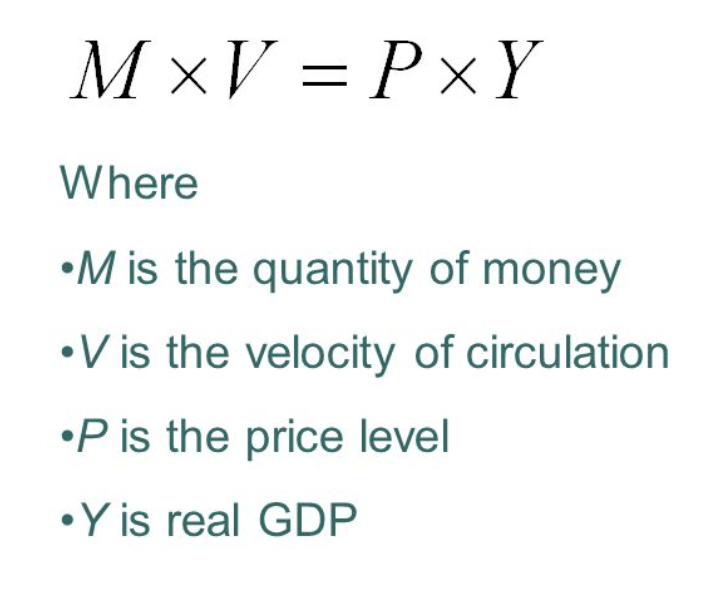
Assuming velocity is constant in the long run, increases in GDP can only produce one thing – a decrease in the price level. As money supply growth has ballooned in the past two years, economic output must rise sufficiently to prevent inflation from spiralling out of control. Through striking, unions limit this.
Preventing workers from producing goods and services that would otherwise increase aggregate supply, only puts further upward pressure on prices. Instead of putting the interests of the country ahead of their selfish needs to soften the damage of the current inflationary spiral, unions are only exacerbating the crisis – preventing the necessary increases in economic output to curb rising prices.
Ultimately, unions continue to burden the British economy by holding the country to ransom. The 1970s saw this on an unprecedented scale. Bankrupting the country through preposterous wage demands was finally drawn to a halt by the Conservative government of the 1980s, creating a sustained platform of economic expansion. Unfortunately, what remains of unions in 2022 leave them still determined to pursue their needs ahead of the whole economy, disrupting hard-working taxpayers all the while exacerbating the current inflationary spiral.

 Free Marketeer