
Contrary to popular belief, Herbert Hoover pursued a heavily interventionist economic agenda. Hoover’s accession to the Presidency in the late 1920s marked a sharp turn from the Republican Party’s laissez-faire economic policies that dominated the 1920s and produced unbridled prosperity. Former President Coolidge presided over balanced budgets, limited government and economic stability. By comparison, Hoover’s response to the shortfall in nominal spending was misguided – pursuing interventionist policies that worsened the Great Depression and created the platform for the New Deal era of FDR.
Background
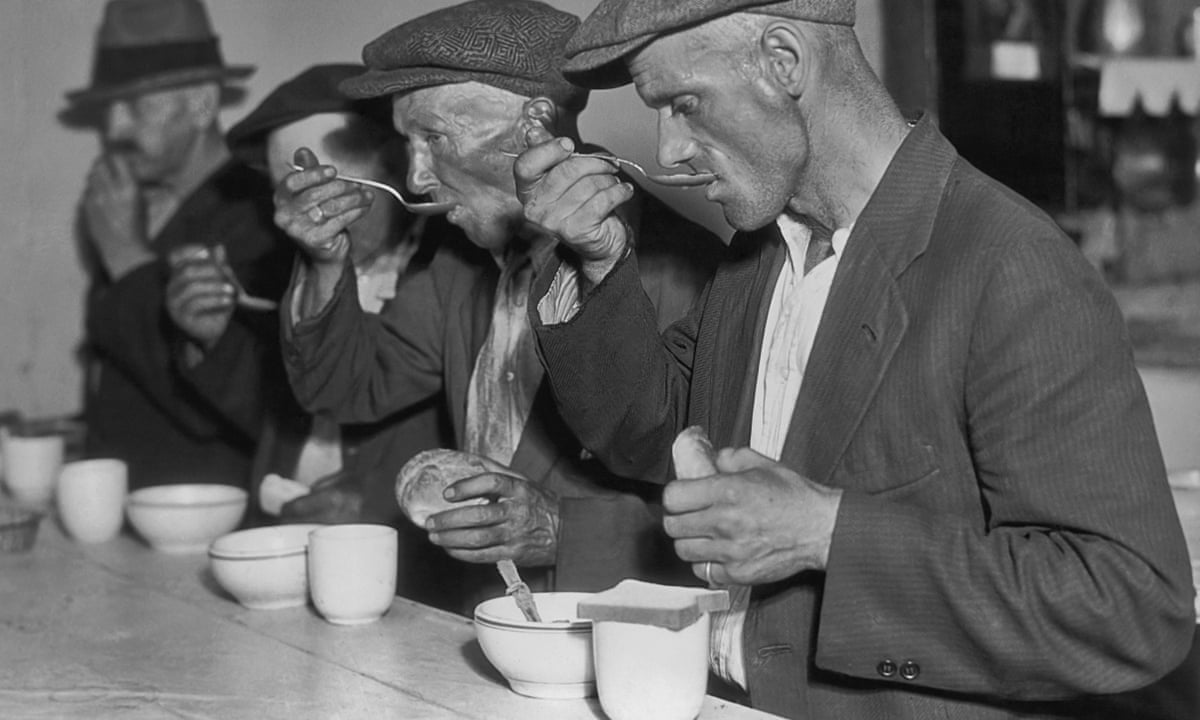
The Great Depression oversaw a sharp decline in living standards.
Overly tight monetary policy pursued by the Federal Reserve laid the groundwork for the Great Depression. Despite nominal spending starting to decline and falling business confidence, the Federal Reserve continued to raise interest rates through 1928 and 1929. This was hugely contractionary and had the effect of inducing further declines in spending in the years ahead. As a result, the Wicksellian interest rate consistent with full employment was profoundly negative by 1931. As the Federal Reserve had pursued contractionary policies for an extended period, negative interest rates were needed to heavily stimulate the economy back to its full employment levels that the US economy achieved in the 1920s. The US witnessed a similar phenomenon in 2008 as the Federal Reserve’s initial mistakes of holding interest rates too high amidst the bankruptcy of Lehman Brothers in 2008 turned a mild recession into a Great Recession.
The spark that marked the start of the Great Depression was the Wall Street Crash of October 1929. The development of the Smoot-Hawley tariffs triggered a sharp sell-off once its implementation became evident to investors. Raising the average tariff by 20% in 1930 was hugely damaging for both US consumers and businesses that faced retaliatory tariffs. The agricultural sector that suffered huge losses from overproduction during the 1920s was particularly hit by reducing their export markets – despite lobbying for the tariff in the first place. Coupled with the contractionary policies by the Federal Reserve, further falls in business confidence from the protectionist policies sparked a sharp decline in aggregate demand that led to mass unemployment and the Great Depression.
Hoover’s Policies
As aforementioned, the Smoot-Hawley tariffs had a hugely damaging effect on US trade. They provoked retaliatory action from Canada and many European nations, leading to a fall in economic activity. Coupled with this, Hoover reversed much of the Mellon tax cuts enacted at the start of the 1920s – the unleashing of private sector activity and an efficient allocation of resources ended. The top income tax rate was hiked from 24% to 63% in late 1931, with the corporate income tax exemption abolished and corporate taxes raised across the board. This further prolonged the Great Depression by taking more funds out of private sector hands, exacerbating the wedge and deadweight welfare loss that taxation brings and leading to a further contraction in economic activity.
Unlike his predecessor and Treasury Secretary, Hoover failed to recognise that tax avoidance becomes prevalent with excessively punitive rates as high-income individuals find it more profitable to rearrange their financial affairs and park funds in tax-exempt securities – as a pose to making productive investments that would benefit the economy. The supply of labour is similarly very elastic for high-income earners. Unlike those on lower incomes, there is a tradeoff between earning higher salaries through additional work and increased leisure time for those on higher incomes. As such, punitively high top-income tax rates lead to less economic activity as leisure becomes more favourable than increased output with higher taxes, as individuals keep less of their earned income. In this way, the lower taxes of the 1920s coincided with higher tax receipts than that of the previous decade; similarly, the higher taxes introduced by Hoover coincided with lower tax receipts than that of the 1920s.
The reluctance of Hoover to leave the Gold Standard similarly exacerbated the economic recovery. The response to a contraction in nominal spending is to either find ways to increase the velocity of money (through greater business confidence) or increase the money supply – as per the equation of exchange.
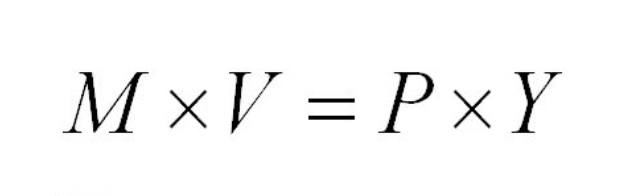
However, with a gold standard, the Central Bank is limited in its ability to increase the money supply as dollars are directly tied to gold. As such, money supply growth can only occur in line with the rate of gold extraction (the gold supply). This prevented the Federal Reserve from enacting expansionary monetary policies as despite record low-interest rates, the ability to enact expansionary open market operations (or more commonly: Quantitative Easing) was limited by adherence to the gold standard. As such, the Central Bank was incapable of effectively stimulating the economy, leaving real interest rates far above rates that were consistent with full employment (Wicksellian interest rate). This was hugely contractionary and led to the sharp fall in nominal spending that led to the Great Depression.
Ultimately, Hoover’s economic agenda contributed to and exacerbated the Great Depression. By raising taxes and tariffs, Hoover increased the ‘government wedge’ that stood to decrease economic activity by increasing friction between market agents while similarly taking money out of private sector hands and leading to a less efficient allocation of resources. The reluctance to abandon the Gold Standard, as his successor would later do, prevented any chance of recovery – as the Federal Reserve stood incapable of tackling the sharp fall in nominal spending as one dollar was tied to an amount of gold.

 Free Marketeer