
Jeremy Hunt’s accession to the chancellorship marked a return to the status-quo Treasury Orthodoxy that has resulted in the managed decline of the UK. A focus on increasing taxes to maintain high levels of public spending and to reduce the budget deficit is misguided – especially for the UK, which suffers from chronic underinvestment with stagnant productivity, coupled with a labour shortage pushing up inflation due to the high inactivity rate of the UK. A more radical approach is required to return the UK to the Thatcher years of record economic growth and soaring median incomes, or that of Blair, who continued Thatcher’s legacy by reducing red tape and encouraging FDI flows.
Investment & Productivity
Productivity growth has virtually flatlined since 2007, and the average output per hour has grown by 0.2% since the financial crisis. There are many reasons for this disastrous outcome for the UK economy. One such would be the inefficient use of resources by many businesses. Over-employment was a massive crisis in the UK during the 1970s, with government-backed SMEs forced to hire a surplus of labour to maintain full employment, consistent with the Keynesian demand-management orthodoxy that prevailed at the time. This was inefficient, leading to the UK declining relative to other Western economies, suffering average growth levels of around 2% between 1950 and 1979, compared to about 4% for Germany, France, the US and Japan. The issue of inefficient working practices likely prevails today, with a lack of innovation and technology adoption in British working practices compared to other Western economies. Excessive bureaucracy and middle management across most sectors have contributed to this inefficient allocation of resources, primarily due to a lack of competition.
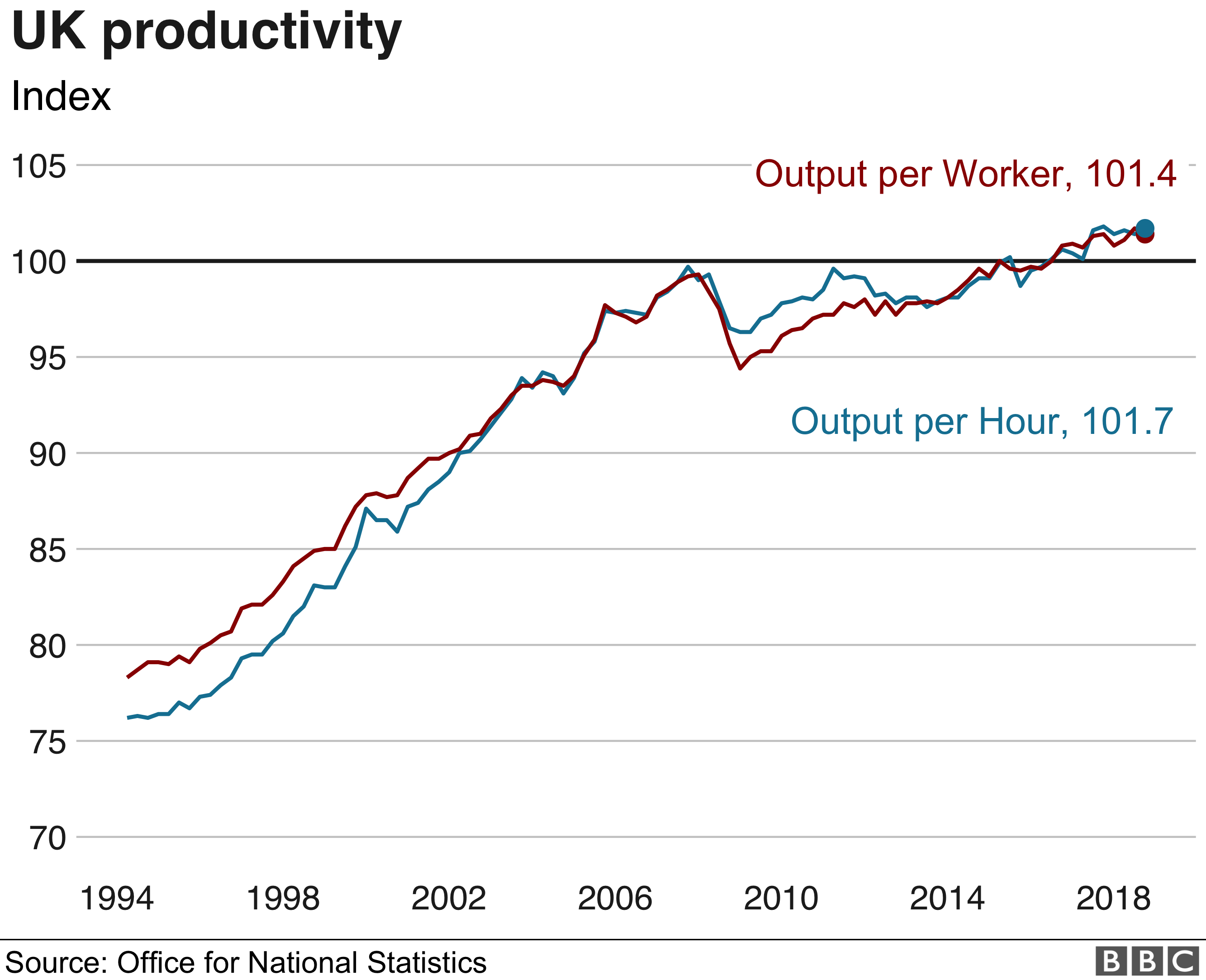
Reducing red tape and allowing foreign investors and private equity funds to address the inefficient working practices within UK firms would move towards resolving this dilemma by reforming working practices and investing in new technologies.
With this said, the most significant cause of the lack of productivity growth in the UK is chronic under-investment. While the UK economy was already lacking in investment before the 2016 Brexit referendum, leaving the EU has only worsened this problem. Since 2016, investment growth has stagnated, while other economies, such as the Eurozone and the US, have capitalised on investor uncertainty in the UK. Increased red tape and trade frictions between the UK and EU have made investors uncertain about the future of the British economy, creating a self-fulfilling prophecy as investment flows elsewhere.

Inactivity
The UK’s generous welfare system for those out of work has led to record inactivity and a subsequent labour shortage that is crippling businesses and resulting in overwork for existing employees. Around half of Universal Credit claimants aren’t in work, again suggesting that a large portion of individuals can work but actively choose not to do so as government benefits are sufficient to sustain a lifestyle otherwise.
As the UK grapples with a labour shortage, reforming welfare to push those able to work into work would be a sensible policy move. Boosting high-skilled immigration numbers is also an excellent policy to further help reduce this crisis, as immigrants are a net contributor to the Treasury. With this said, the latter is politically toxic currently, especially given the surge in illegal migrant boats entering the UK. As such, the first option of reforming welfare and PIP payments should be considered by the UK government to grapple with the current labour shortage crisis that hurts British consumers and businesses. The current Treasury under Jeremy Hunt needs to consider these options instead of raising taxes and further punishing entrepreneurs and wealth creators in the UK.
Ultimately, Jeremy Hunt’s current policy agenda as Chancellor of the Exchequer is maintaining the status quo and continuing the relative decline of the British economy. As a pose to tackling the chronic lack of investment, productivity growth and the labour shortage through supply-side reform of cutting business rates and removing bureaucratic red tape, the ‘Conservative’ government has opted to continue raising taxes and boosting public spending on transfer payments that won’t help boost the productive potential of the UK economy in the long run.

 Free Marketeer